OEM Approved Manufacturer
A trusted OEM-approved manufacturer and parts supplier in the industry.

Why ÜÇASLAR?
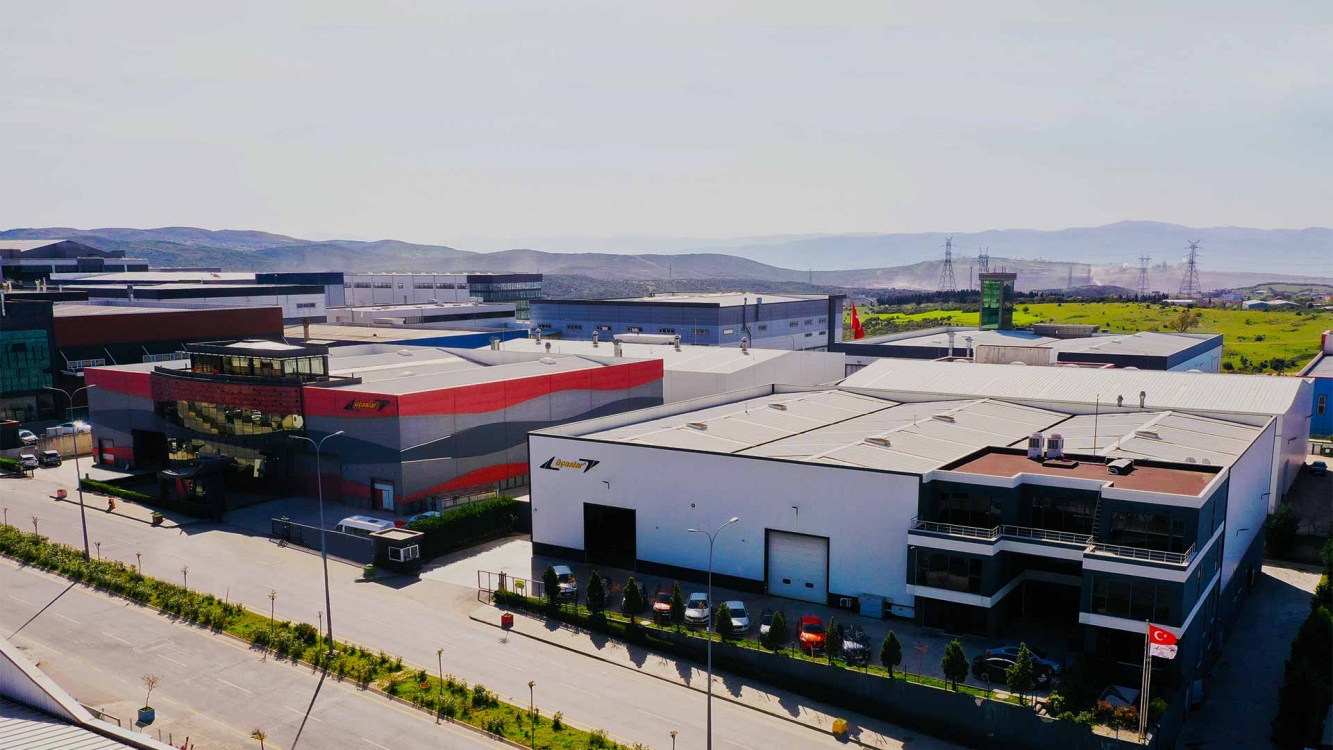
ÜÇASLAR is a strong manufacturing brand that has been maintaining international-standard spare parts production for different industries since 1960. More...
A trusted OEM-approved manufacturer and parts supplier in the industry.
Continuously advancing its production strength through an investment and innovation-driven approach.
A broad product range serving the needs of different industries.
A quality approach supported by international certifications and rigorous control processes.
Blog
 20 May 2026
 15 December 2025
Discover the most critical heavy machinery engine components, including pistons, crankshafts, valves, and diesel fuel systems, and why they matter.
Read article 07 November 2025
ÜÇ ASLAR ensures global manufacturing quality with ISO 9001:2015 and AS9100D certifications. More than a document — our quality is proven through ...
Read article 25 July 2025
Discover how bogie systems enhance the stability, traction, and performance of heavy equipment. Learn the roles of front and rear bogies, tandem and w ...
Read article 24 June 2025
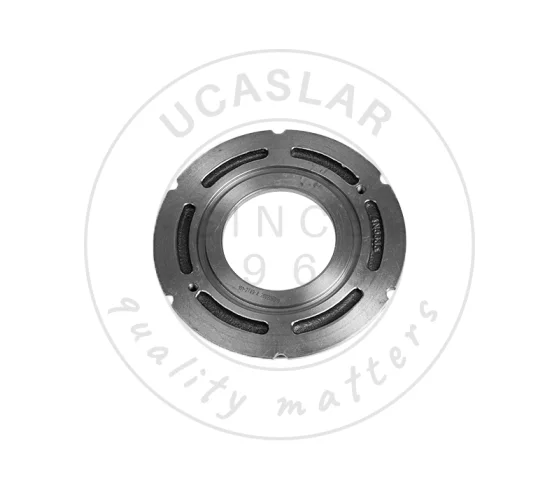
Ucaslar’s engine spacer plates ensure proper fitment between engine and transmission. Solve alignment issues with precision-machined components.
Read article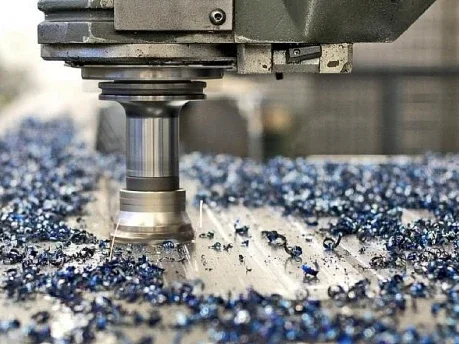
Machining is an important production method that serves to obtain the desired shape by processing metal and other hard materials. This method is performed by cutting off the excess material and leaving only the part that is needed. Especially the types of enterprises engaged in machining manage this production process efficiently and play a major role in projects that require high precision. Thanks to this method, production errors are reduced to a minimum while producing high-quality parts.
CNC machining is a more advanced and automated version of the traditional machining method. Thanks to computer-controlled machines, it is ensured that the parts are produced more precisely and flawlessly. CNC machines offer a great advantage for machining enterprises because these machines produce complex designs quickly and accurately. From automotive to aviation, CNC machining finds a wide range of applications in many sectors. At the same time, this process, in which human intervention is minimized, reduces production time and improves quality.
Outsourced machining is a method that provides flexibility to enterprises that want to increase their production capacity or obtain external services for specific products. Enterprises engaged in machining can make the parts they need to contract manufacturers using this method without using their own machines. This provides a cost advantage, especially for small and medium-sized enterprises. Contract manufacturers offer support to enterprises in production processes that require expertise and can implement complex designs with high precision. UCASLAR has gained an important place in the sector by providing CAD/CAM supported contract machining solutions to its customers as Construction Machinery and Automotive Spare Parts.
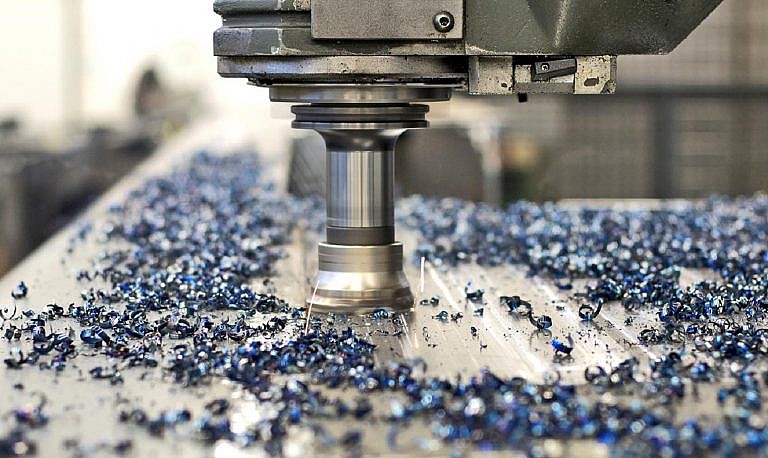
Construction machinery is a large and durable equipment used in heavy industry and construction sector. The spare parts of these machines are vital for their proper operation. Machining is a frequently preferred method in the production of spare parts for construction machinery. CNC machines with CAD CADM support produce these spare parts in the most precise and durable way. High-quality parts ensure efficient operation of construction machinery and reduce the risk of malfunctions. The precision in the machining process contributes to the long service life and reliability of construction machine spare parts.
Thanks to machining, spare parts are cut and shaped with millimeter precision, which ensures a long service life of construction machines. UCASLAR stands out in the sector by offering high-quality machining solutions in the production of spare parts. This method plays a major role in the production of durable parts required by machines operating under severe conditions and provides reliable performance.
Machining has become more modern with technological developments over the years. CNC machines and other automation technologies have increased the quality while speeding up the production processes in this area. In the future, enterprises engaged in machining can further optimize their production processes with artificial intelligence and 3D printing technologies. In addition to this, sustainability will also hold an important place in the future of machining. Energy saving and waste material management will enable innovative steps to be taken in this sector by ensuring that production processes become environmentally friendly.
Use this sample to verify homepage entry popup timing, closing behavior and CTA flow.